

Currently Empty: $0.00

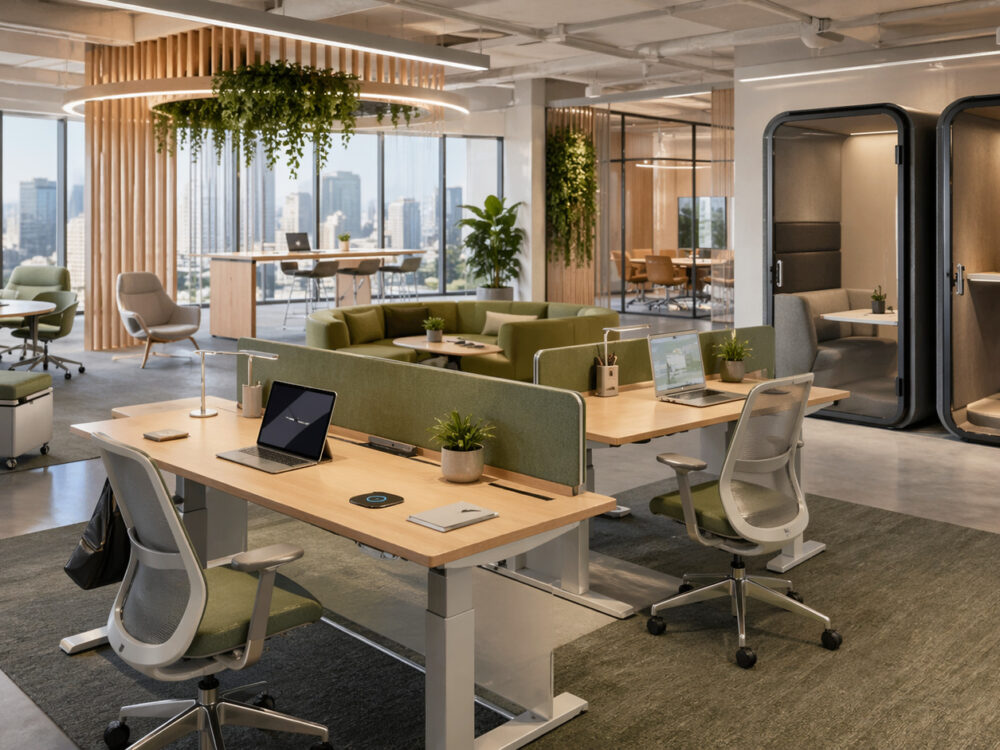
The workplace is evolving faster than at any point in history. Driven by technology, changing workforce expectations, and the rise of hybrid work, office furniture is no longer just about desks and chairs—it is becoming a strategic tool that shapes how companies operate.
Over the next 10 years, office furniture will undergo a major transformation. It will become more flexible, more integrated with technology, and more focused on human performance.
This article explores the key trends that will define the future of office furniture and how businesses can prepare for what’s coming.
The Shift From Static to Flexible Workspaces
Traditional offices were designed for stability. Employees had assigned desks, fixed layouts, and predictable workflows. That model is rapidly disappearing.
The future workplace is dynamic. Teams grow, shrink, and reorganize frequently. Employees move between remote and in-office work. As a result, furniture must adapt.
Modular systems will dominate. Workstations that can be reconfigured, expanded, or reduced will become the standard. Companies will prioritize flexibility over permanence.
Technology Integration Will Become Standard
Furniture will no longer be separate from technology—it will be part of it.
Desks will include built-in power, wireless charging, and connectivity. Conference tables will integrate seamlessly with video conferencing systems. Workstations will support multiple devices without clutter.
This integration will improve efficiency and reduce the need for external accessories.
The Rise of Data-Driven Workspaces
Companies will increasingly use data to make furniture decisions. Sensors and analytics will track how spaces are used, allowing businesses to optimize layouts and resource allocation.
This means fewer wasted spaces and more efficient environments.
Wellness Will Be a Priority
Employee well-being will drive furniture design. Adjustable desks, ergonomic seating, and movement-friendly layouts will become essential.
Companies will recognize that healthier employees are more productive and engaged.
Final Thoughts
The future of office furniture is about adaptability, integration, and performance. Companies that embrace these trends will create workspaces that support growth and innovation.