

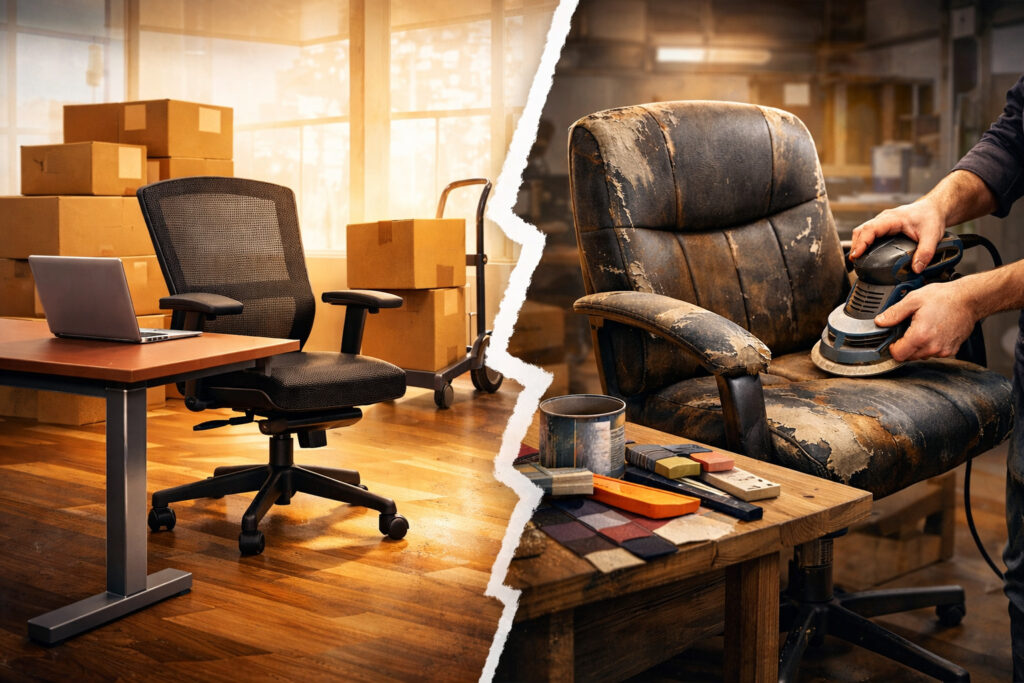
Office furniture is one of the largest long-term investments a business makes in its physical workspace. Desks, workstations, seating, storage, and collaborative pieces all play a role in productivity, employee experience, brand image, and operational efficiency. Yet many companies struggle with one critical decision: Should we replace our office furniture — or refurbish what we already have?
This decision is not just about aesthetics. It impacts budget planning, employee comfort, sustainability goals, and long-term facility strategy. While replacing furniture can bring a fresh, modern look and updated functionality, refurbishing can extend the life of quality assets while dramatically reducing costs.
In this guide, we’ll break down the real costs, benefits, and strategic considerations behind both options so your business can make the smartest decision possible.
Why This Decision Matters More Than Most Companies Realize
Office furniture is often treated as a one-time purchase. But in reality, it behaves more like infrastructure. It influences workflow efficiency, employee satisfaction, maintenance costs, and even company culture. Making the wrong decision between replacement and refurbishment can lead to:
- Unnecessary capital expenses
- Productivity disruptions
- Employee dissatisfaction from poor ergonomics
- Inconsistent office branding
- Higher long-term operational costs
On the other hand, making the right decision can help companies stretch budgets, upgrade functionality, and improve workspace performance without overspending.
What Refurbishing Office Furniture Really Means
Refurbishing is not simply cleaning or repainting furniture. Professional refurbishment typically involves restoring furniture to near-new condition through:
- New fabric or upholstery
- Fresh paint or powder coating
- Surface refinishing or laminate replacement
- Hardware repairs or replacements
- Panel reconfiguration or resizing
- Mechanical repairs for chairs and height-adjustable desks
When done properly, refurbished furniture can perform almost identically to new furniture — often at a fraction of the cost.
The Real Cost Comparison: Replace vs Refurbish
1. Upfront Financial Cost
The most obvious factor is the purchase price.
Replacing furniture: Buying brand-new furniture typically costs two to four times more than refurbishing existing pieces, especially when dealing with large workstation systems or executive furniture.
Refurbishing furniture: Refurbishment usually costs 30–60% of the price of buying new, depending on the condition of the original furniture and the level of customization required.
For companies outfitting entire offices or multiple locations, this difference can translate into tens or even hundreds of thousands of dollars in savings.
2. Installation and Transition Costs
Replacing furniture often requires full removal, disposal, delivery, installation, and potential layout redesign. This can cause operational disruption.
Refurbishment, on the other hand, may allow staged upgrades, minimizing downtime and maintaining workflow continuity.
3. Lifecycle Value
High-quality commercial furniture is designed to last 10–20 years. If your existing furniture still has structural integrity, replacing it prematurely wastes remaining lifecycle value.
Refurbishment allows companies to capture that remaining lifespan while still upgrading appearance and performance.
When It Makes Sense to Refurbish Office Furniture
Your Furniture Is Structurally Sound
If desks, panels, and storage units remain stable and functional, cosmetic upgrades may be all that’s needed. Many high-end manufacturers design furniture to last decades, meaning refurbishment is often the smarter financial choice.
You Need to Control Capital Spending
Refurbishment is ideal when companies want to improve the workspace without committing to large capital expenditures. It allows upgrades while preserving budget flexibility for growth, hiring, or technology investments.
You Want to Maintain Layout Consistency
If your current layout works well, refurbishment avoids the need for redesign, retraining, and workflow adjustments. Teams can remain in familiar environments while still benefiting from refreshed furniture.
You Want Customization Without Custom Pricing
Refurbishment allows businesses to update colors, finishes, and fabrics to match branding — without paying premium prices for custom new furniture.
You Have Sustainability Goals
Extending the life of furniture significantly reduces landfill waste and manufacturing demand. For companies prioritizing environmental responsibility, refurbishment supports sustainability initiatives while still delivering a modern look.
When Replacing Office Furniture Is the Better Choice
Your Furniture No Longer Meets Functional Needs
If your company has shifted to hybrid work, open collaboration zones, or more private call areas, your existing furniture may no longer support how people actually work. In this case, replacement may be necessary to align furniture with workflow strategy.
The Furniture Is Mechanically Worn Out
Chairs with failing cylinders, desks with damaged frames, or panels that no longer stabilize properly may cost more to repair than replace. When structural wear affects performance or safety, replacement is often the smarter option.
You’re Rebranding or Relocating
Major brand shifts or new office locations often justify new furniture. A new workspace provides an opportunity to rethink layout, aesthetics, and functionality from the ground up.
The Existing Furniture Is Low Quality
If the original furniture was budget-grade to begin with, refurbishment may not provide meaningful value. Investing in durable, commercial-grade furniture may offer better long-term ROI.
The Hidden Costs Many Companies Forget to Consider
Employee Productivity
Furniture affects posture, comfort, workflow efficiency, and collaboration. Poorly functioning furniture can quietly reduce productivity and increase fatigue, which has a real financial impact.
Brand Perception
Clients, partners, and recruits notice the workspace. Outdated or worn furniture may unintentionally signal stagnation, while updated spaces communicate professionalism and momentum.
Maintenance Costs
Old furniture often requires frequent repairs. If maintenance expenses continue to rise year after year, replacement may become the more economical long-term solution.
A Strategic Framework for Making the Right Decision
Instead of guessing, companies should evaluate furniture decisions using a simple strategic framework:
Step 1: Evaluate Structural Condition
Is the furniture still safe, stable, and functional?
Step 2: Assess Functional Fit
Does the furniture support how employees work today?
Step 3: Compare Financial Impact
Calculate refurbishment cost vs replacement cost across the entire office, not just per item.
Step 4: Consider Long-Term Plans
Is your company planning expansion, relocation, or rebranding within the next few years?
Step 5: Balance Budget vs Strategic Value
The cheapest option is not always the smartest. The best choice is the one that aligns cost efficiency with long-term workspace strategy.
Why Many Smart Companies Choose a Hybrid Approach
In many cases, the best solution is not strictly replace or refurbish — but a combination of both.
For example, companies often:
- Refurbish workstation panels and storage
- Replace worn seating with new ergonomic chairs
- Add new collaborative furniture where needed
- Upgrade finishes to modernize the entire office look
This approach balances cost control with meaningful workspace improvement, delivering the benefits of both strategies.
Final Thoughts: The Smartest Decision Is the Strategic One
Choosing between replacing and refurbishing office furniture isn’t just a purchasing decision — it’s a strategic one. The right choice depends on furniture condition, business growth plans, employee needs, and financial priorities.
Refurbishment can dramatically reduce costs while extending the life of high-quality assets. Replacement can unlock new functionality and transform how teams work. The smartest companies evaluate both options carefully before committing.
If your business is considering an office upgrade, the first step isn’t buying furniture — it’s understanding what you already have, what your team truly needs, and what decision delivers the strongest long-term value.
Making that decision thoughtfully can turn your office furniture from a cost center into a strategic advantage.