

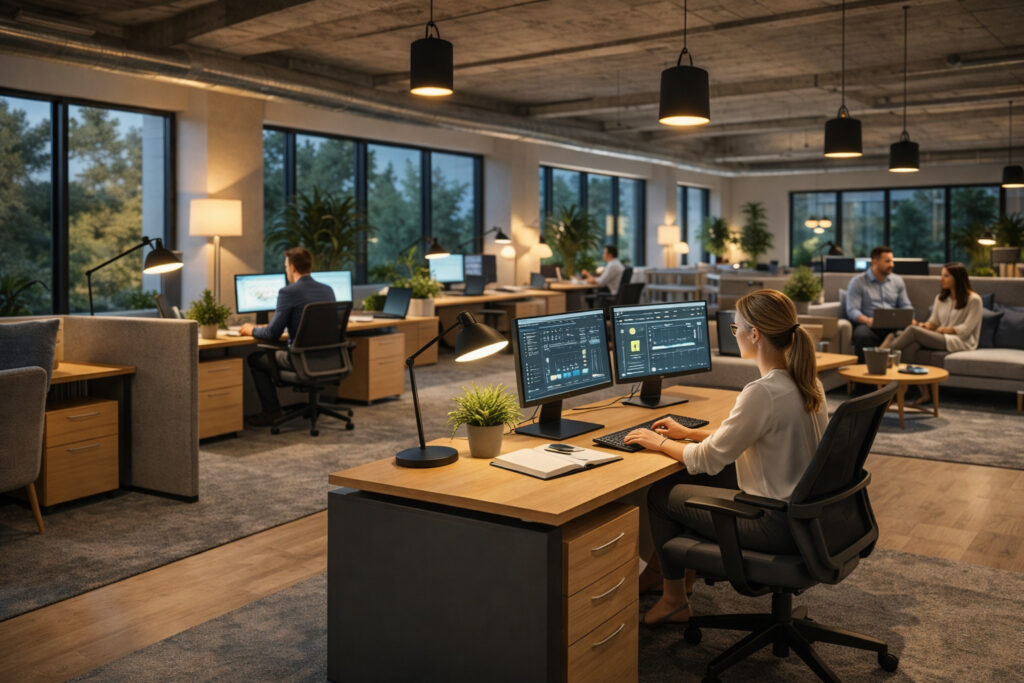
When businesses think about improving office productivity, they often focus on furniture or layout alone. However, one of the most overlooked factors is the relationship between lighting and furniture. These two elements work together to shape how employees feel, focus, and perform throughout the day.
A well-designed workspace integrates both lighting and furniture to create an environment that supports comfort, efficiency, and long-term health.
The Connection Between Lighting and Productivity
Lighting directly impacts energy levels, mood, and focus. Poor lighting can cause eye strain, fatigue, and reduced concentration. On the other hand, well-designed lighting improves alertness and enhances performance.
Furniture placement must align with lighting conditions to maximize these benefits.
Natural Light and Furniture Layout
Natural light is one of the most valuable resources in office design. Positioning desks near windows allows employees to benefit from daylight, which improves mood and reduces fatigue.
However, improper placement can create glare on screens, leading to discomfort.
Best practices include:
- Positioning desks perpendicular to windows
- Using adjustable blinds to control glare
- Avoiding direct light on screens
Artificial Lighting and Workspace Function
Artificial lighting should complement natural light and support different work activities.
- Task lighting for focused work
- Ambient lighting for general visibility
- Accent lighting for collaborative spaces
Furniture arrangement should reflect these lighting layers to create a balanced environment.
Ergonomics and Lighting
Furniture and lighting together influence posture and comfort. Poor lighting may cause employees to lean forward or adjust their position, leading to strain over time.
Proper desk height, monitor placement, and lighting angles ensure a comfortable working posture.
Final Thoughts
Lighting and furniture should never be designed in isolation. Together, they create an environment that supports productivity, comfort, and well-being. Businesses that align these elements gain a competitive advantage through improved employee performance.