

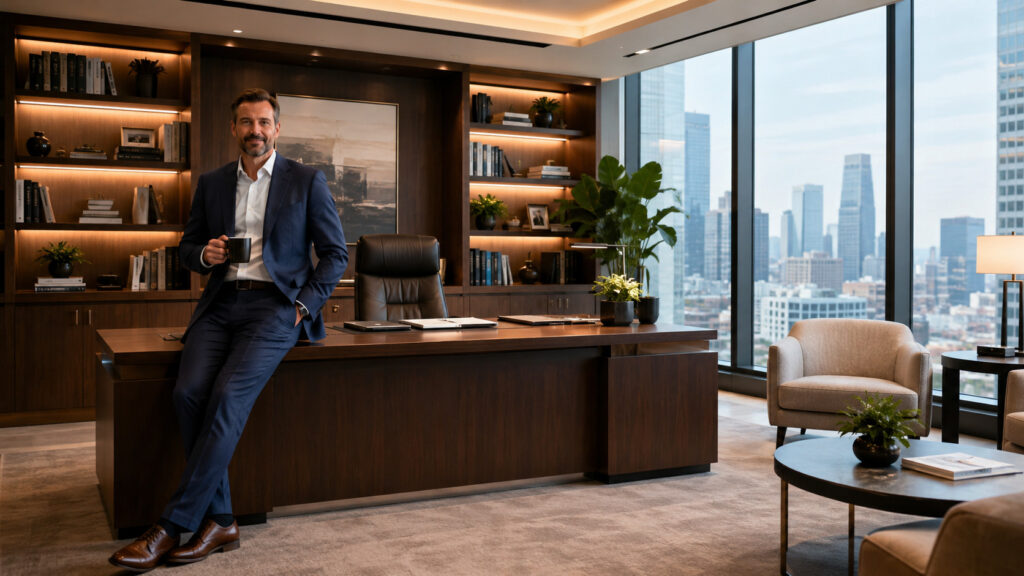
An executive office is more than just a private workspace. It is a reflection of leadership style, company culture, and professional identity. The design of that office communicates powerful messages to employees, clients, and visitors long before a conversation begins.
The challenge for many leaders is finding the right balance. An office that feels too intimidating can discourage communication and create distance between leadership and teams. On the other hand, an office that feels too casual may weaken authority and professionalism.
The best executive offices balance both: they project confidence and leadership while remaining approachable and functional.
Why Executive Office Design Matters
Leadership presence is influenced by environment. Employees interpret physical spaces as symbols of company priorities and leadership style.
An executive office influences:
- Perception of authority
- Accessibility and communication
- Professional image
- Company culture
Every furniture and layout decision contributes to that perception.
The Executive Office Has Multiple Roles
An executive office must support several different functions simultaneously.
It needs to provide:
- A workspace for focused strategic thinking
- A professional environment for meetings
- A private setting for confidential conversations
- A reflection of leadership identity
This balance requires intentional design.
The Executive Desk: The Centerpiece of Leadership
The desk is the focal point of the office. It should communicate professionalism and stability without feeling excessive or disconnected.
Key considerations include:
- Clean and organized design
- High-quality materials
- Adequate workspace functionality
- Balanced size relative to the room
An oversized desk can create unnecessary distance, while a poorly chosen desk may weaken the office’s presence.
Seating Shapes Communication
Guest seating strongly influences how conversations feel.
Comfortable and thoughtfully arranged seating creates a more open and collaborative atmosphere.
Good executive offices often include:
- Visitor chairs positioned for conversation
- Small collaborative meeting areas
- Lounge seating for informal discussions
This creates a more approachable leadership environment.
Layout and Accessibility
The layout of an executive office affects how accessible leadership feels.
Completely isolated offices can unintentionally create emotional distance from teams.
Modern executive offices increasingly use:
- Glass walls or partitions
- Open-door layouts
- Shared collaborative zones nearby
This maintains professionalism while improving visibility and connection.
Technology Integration
Executive offices must support modern communication and productivity needs.
This includes:
- Integrated video conferencing setups
- Proper cable management
- Technology-friendly meeting areas
Technology should feel seamless, not cluttered.
Final Thoughts
An executive office should reinforce leadership without creating unnecessary barriers.
The best spaces balance professionalism, comfort, authority, and accessibility.
When designed thoughtfully, the executive office becomes more than a workspace—it becomes a leadership tool.