

Inclusion isn’t optional — it’s essential. Whether you’re designing a new office or refreshing an existing one, **accessible office design** ensures that all employees, visitors, and collaborators can navigate, use, and enjoy workspaces with ease. Furniture plays a central role in creating environments that are welcoming and equitable for people of all abilities.
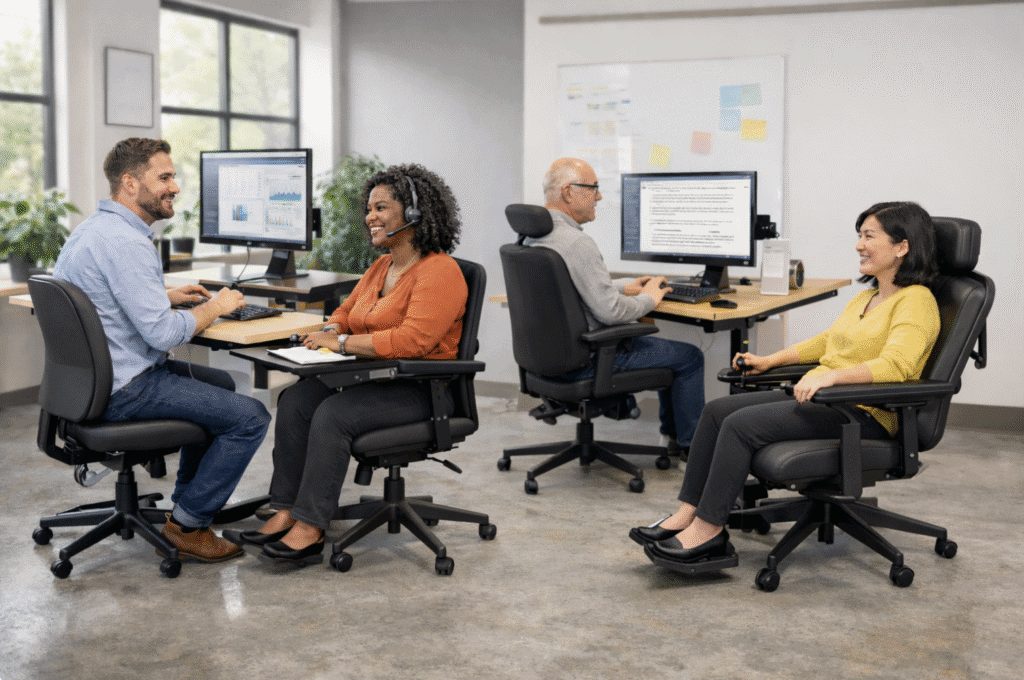
[IMAGE PLACEMENT: A diverse team using accessible workstations with adjustable desks and assistive chairs]
What Is Accessible Office Design?
Accessible office design goes beyond ramps and wide doorways. It includes furniture that accommodates users of all heights, mobility levels, and sensory needs. The goal is to remove physical and sensory barriers so everyone can work confidently and comfortably.
Ergonomic Choices for All Bodies
Traditional desks and chairs may not support users with different body types or mobility needs. Accessible office design incorporates adjustable furniture, including:
- Height‑adjustable desks — for seated or standing use
- Wide, adjustable chairs with armrests and lumbar support
- Accessible conference tables with knee clearance and cable management
[IMAGE PLACEMENT: Inclusive workstation setup with ample legroom and adjustable monitor stands]
Clear Pathways and Thoughtful Layouts
Furniture placement affects how easily someone can move through an office. Make sure aisles are wide enough for wheelchairs, walkers, or assistive devices. Avoid sharp corners near high‑traffic areas and choose rounded tables or soft seating to reduce injury risk.
Signage and Sensory Comfort Accessible office design also considers sensory differences. Clear, high‑contrast signage helps visually impaired individuals navigate spaces. Soft lighting minimizes glare, and acoustic panels help reduce noise distractions — aiding neurodiverse employees or those with sensory sensitivities. [IMAGE PLACEMENT: Office corridor with accessible signage and soft lighting]
Inclusive Meeting Spaces Meeting rooms should include furniture that supports participation from all attendees. Ensure tables have enough clearance for wheelchairs, provide adjustable chairs, and consider lower counters for shared spaces like cafeterias or reception areas.
Technology Integration and Accessibility
Assistive technology can complement accessible furniture — for example, adjustable screens at ergonomic heights, adaptive keyboards, and voice‑activated tools. These items are part of an inclusive environment that works for all.
Benefits Beyond Accessibility
Accessible office design benefits *everyone*. Height‑adjustable desks and ergonomic chairs improve posture and comfort for all employees, not just those requiring accommodations. Clear pathways and thoughtful layouts improve safety and productivity across the board.
[IMAGE PLACEMENT: Employees of varied abilities collaborating comfortably around accessible furniture]
Final Thoughts
Accessible office design isn’t just about meeting requirements — it’s about humanity and respect. By integrating furniture and layouts that work for all, you create a more inclusive culture, improve employee engagement, and position your company as forward‑thinking and equitable.
Need help making your office truly accessible? Contact Cube World USA for an inclusive design consultation tailored to your space and team.