

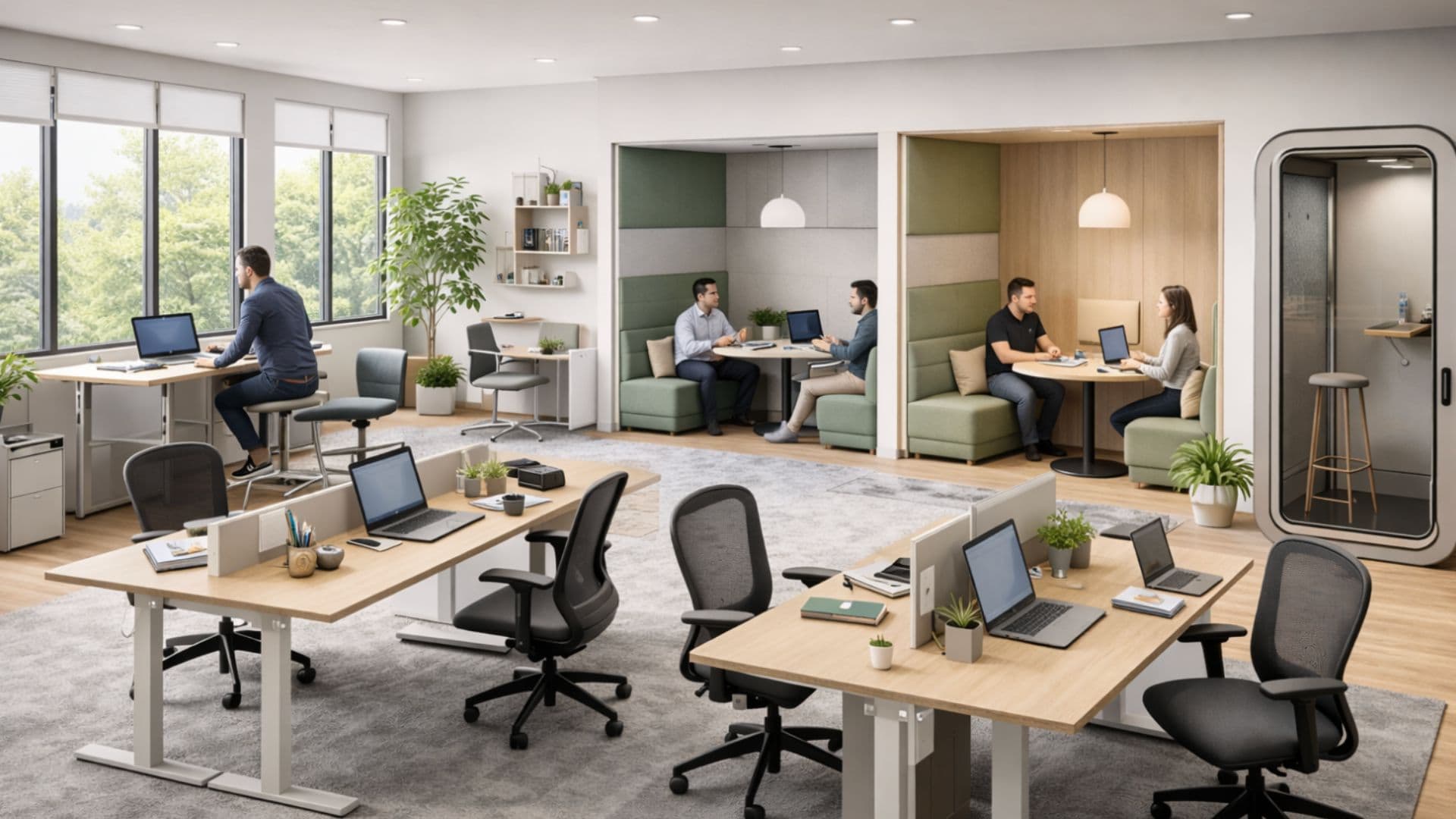
The way people work has changed forever. Hybrid work schedules — where employees alternate between remote and in‑office days — are now standard in many industries. While technology often gets the attention when discussing hybrid models, the physical office environment and the furniture within it are equally important. The right hybrid office furniture supports flexibility, comfort, collaboration, and a seamless transition between different work modes. This article explores how smart furniture choices enable hybrid teams to thrive.
[IMAGE PLACEMENT: A mixed hybrid workspace showing hot desks, collaboration pods, and ergonomic seating]
What Makes Furniture “Hybrid‑Ready”?
Hybrid office furniture isn’t just furniture placed in a room — it’s designed to adapt. A hybrid environment needs:
- Flexible setups that support both solo focus and team collaboration
- Hot desking stations with plug‑and‑play access
- Comfortable, adjustable seating for sporadic office use
- Mobile components that allow quick reconfiguration
Start With Hot‑Desking Solutions
One of the most significant aspects of hybrid work is that employees don’t have a dedicated desk every day. Instead, hot‑desking — where employees reserve desks as needed — helps maximize space and minimize wasted square footage. Key to successful hot‑desking is hybrid office furniture that includes:
- Height‑adjustable desks
- Easy access to power and USB ports
- Lockable storage for personal items
[IMAGE PLACEMENT: Hot desking stations with built‑in power and storage lockers]
Mobile and Modular Components
Hybrid offices benefit immensely from mobile or modular furniture that can be rearranged based on the day’s needs. Moveable partitions, rolling tables, and modular lounge setups can create intimate collaboration areas or open, spacious layouts within minutes. This flexibility supports spontaneous meetups, project planning sessions, or quiet focus time without construction or permanent commitment.
Comfort for In‑Office Days
Employees coming into the office part time need furniture that doesn’t feel like a punishment after working at home. That means:
- Ergonomic chairs with adjustable settings
- Desks that support both sitting and standing
- Soft seating for casual catchups
- Breakout furniture that encourages informal interaction
[IMAGE PLACEMENT: Ergonomic hybrid office setup with lounge and standing desks]
Tech Integration Is a Must
Hybrid work relies on seamless communication between remote and in‑office employees. Furniture plays a part in supporting tech needs. Conference tables with integrated cabling, desks with monitor mounts, and seating that accommodates laptops and tablets all make hybrid work easier. Surface spaces designed for video calls and brainstorming sessions bridge physical and digital collaboration.
Zones for Different Work Types
Hybrid office design often includes designated zones:
- Focus zones — quiet desks or cubicles for heads‑down tasks
- Collaborative zones — open tables and writable surfaces for team sessions
- Social zones — lounge seating and café areas for casual interaction
- Private booths — phone or video call booths for hybrid meetings
[IMAGE PLACEMENT: Hybrid office zones with labeled focus, collaboration, and social areas]
Supporting Employee Well‑Being
Hybrid work can blur the lines between office and home. Furniture that supports comfort, posture, and movement helps reduce stress and fatigue. Sit‑stand desks, ergonomic chairs, and accessories like monitor arms and footrests all contribute to healthier habits on in‑office days. These choices reinforce that the organization cares about employee well‑being — an important factor in retention and satisfaction.
Data‑Driven Decisions for Hybrid Layouts
Use desk reservation data, occupancy sensors, and employee feedback to refine your hybrid furniture plan. What furniture is used most often? Where are bottlenecks or dead zones? This data should inform future purchases and layout tweaks, ensuring your hybrid office remains efficient and supportive.
Final Thoughts
The success of a hybrid work strategy isn’t just about schedules — it’s about physical space that supports how people work today. Investing in hybrid office furniture that is flexible, comfortable, and tech‑ready enhances productivity and strengthens team culture. With thoughtful choices, your hybrid office will be a place employees *want* to come back to — not just a place they *have* to be.
Ready to optimize your hybrid workspace? Contact Cube World USA for a custom furniture plan that supports your hybrid strategy.