

Currently Empty: $0.00

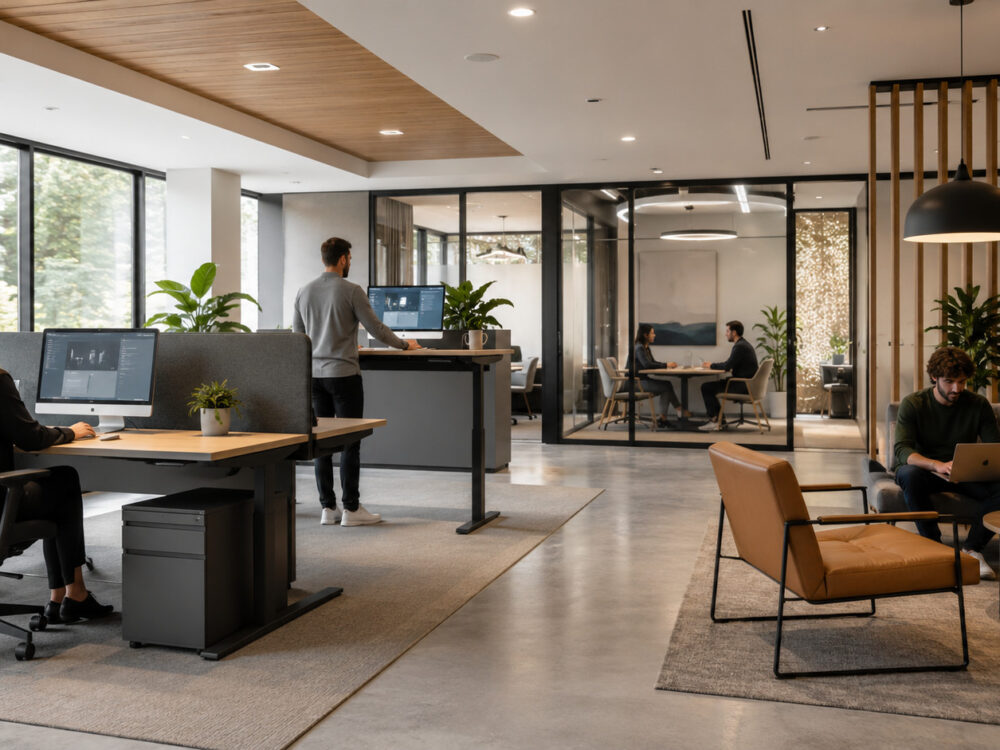
Every business wants a productive workforce. Companies invest in better technology, stronger leadership, and improved processes—but often overlook one of the most immediate and controllable factors influencing productivity: the physical workspace.
Office furniture is not just about filling a room with desks and chairs. It directly impacts how employees feel, how they move, how they focus, and how efficiently they perform their daily tasks. A poorly furnished office creates friction, discomfort, and inefficiency. A well-furnished office removes obstacles and supports high performance.
In this guide, we’ll break down exactly how to furnish an office for maximum productivity, covering everything from ergonomics to layout strategy to long-term planning.
Why Office Furniture Directly Impacts Productivity
Productivity is not just about effort—it’s about environment. Even the most motivated employees struggle to perform in a workspace that works against them.
Furniture affects productivity in several key ways:
- Comfort and physical well-being
- Ease of movement and workflow
- Ability to focus without distraction
- Access to tools and resources
- Collaboration efficiency
When these elements are optimized, employees can perform at a higher level with less resistance.
Start With Ergonomics: The Foundation of Productivity
Ergonomics is the most important factor in office furniture selection. If employees are uncomfortable, productivity will suffer—no matter how well everything else is designed.
Why Ergonomics Matters
Employees spend hours each day sitting, typing, and focusing on screens. Poor ergonomics leads to fatigue, discomfort, and long-term health issues.
Common problems include:
- Back and neck pain
- Wrist strain
- Poor posture
- Reduced energy levels
These issues directly reduce focus and output.
Key Ergonomic Furniture Investments
- Adjustable office chairs with lumbar support
- Proper desk height for neutral posture
- Monitor positioning at eye level
- Optional sit-stand desks for movement
Investing in ergonomics is not a luxury—it is a necessity for sustained productivity.
Designing for Different Work Zones
One of the biggest productivity mistakes companies make is treating the entire office as one type of space.
In reality, employees perform different types of work throughout the day, including:
- Deep focus work
- Collaborative teamwork
- Phone and video calls
Each of these requires a different environment.
Focus Zones
Quiet areas with minimal distractions for tasks that require concentration.
Collaboration Zones
Open areas designed for teamwork and idea sharing.
Call Zones
Private or semi-private spaces for meetings and calls.
Separating these zones allows employees to work more efficiently without interfering with each other.
Layout Efficiency: Reducing Friction
Furniture layout plays a major role in productivity. Even with high-quality furniture, poor layout creates inefficiencies.
Common Layout Issues
- Departments that collaborate placed far apart
- Long walking distances for basic tasks
- Cluttered pathways and bottlenecks
These small inefficiencies add up over time.
Best Practices for Layout
- Group teams based on collaboration needs
- Create clear and open pathways
- Place shared resources centrally
Efficient layouts reduce wasted time and improve workflow.
Smart Storage Solutions Reduce Mental Clutter
Clutter is one of the biggest enemies of productivity. Disorganized spaces create distractions and make it harder to focus.
Smart storage solutions include:
- Mobile pedestals for personal storage
- Shared filing systems for teams
- Integrated cable management to reduce visual clutter
Clean and organized workspaces promote clearer thinking and faster execution.
Lighting and Furniture Work Together
Furniture placement should align with lighting conditions.
Key considerations:
- Position desks near natural light when possible
- Avoid glare on screens
- Use task lighting for focused work
Proper lighting reduces eye strain and improves focus.
Flexibility and Adaptability
Productive offices are not static—they evolve. As teams grow and work styles change, furniture must adapt.
Modular furniture systems allow:
- Easy reconfiguration
- Scalable layouts
- Long-term cost savings
Flexibility ensures that the office continues to support productivity over time.
The Role of Comfort in Sustained Performance
Comfort is not about luxury—it is about endurance. Employees who are physically comfortable can maintain focus for longer periods.
Comfort includes:
- Proper seating support
- Adequate workspace size
- Temperature and lighting balance
These factors contribute to consistent performance throughout the day.
Final Thoughts
Furnishing an office for maximum productivity is not about buying the most expensive furniture—it’s about making the right decisions.
By focusing on ergonomics, layout efficiency, work zones, and flexibility, companies can create environments that support high performance.
In the end, productivity is not just about what employees do—it’s about the environment that supports them.
And when that environment is designed correctly, everything improves.