

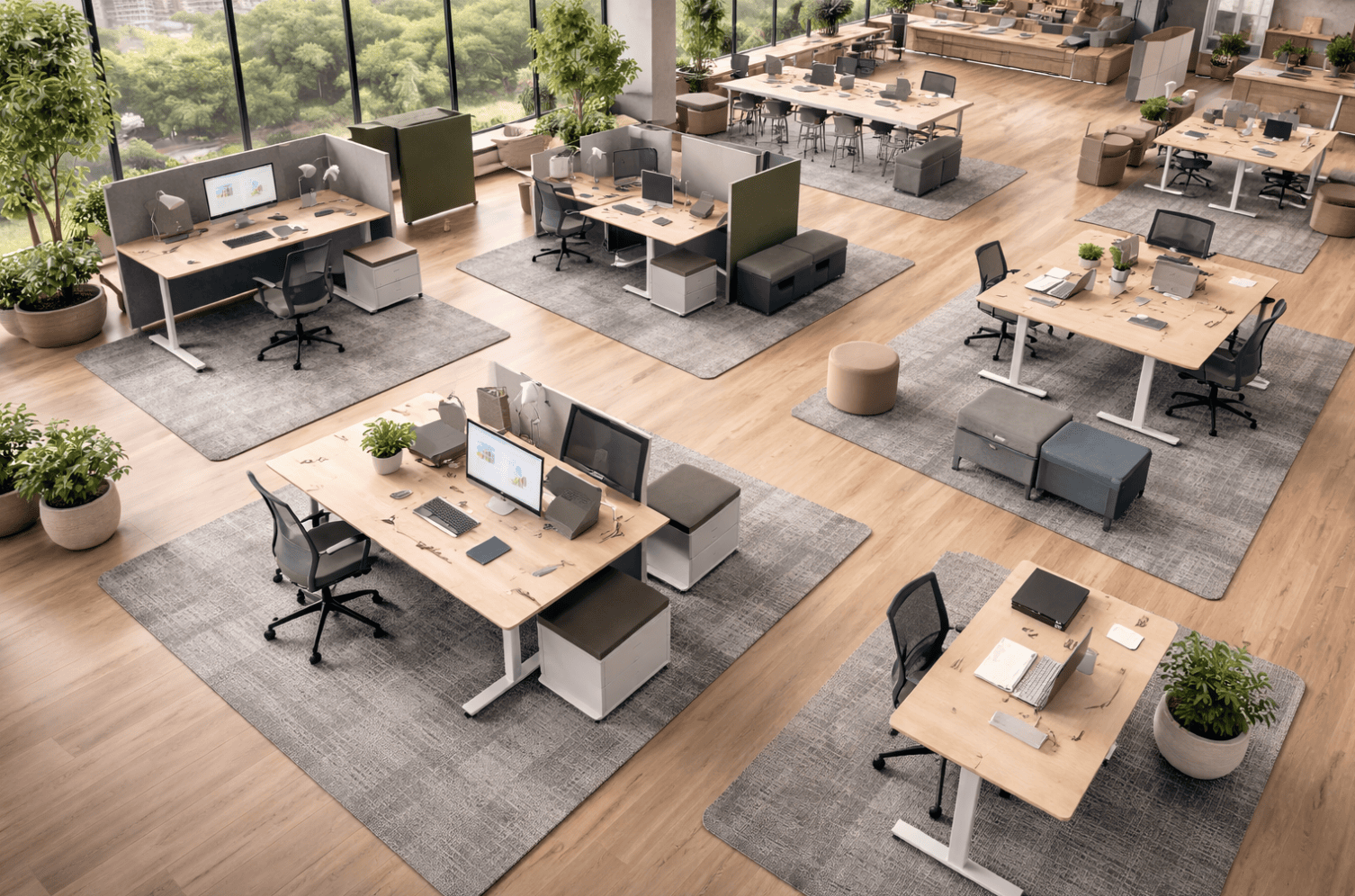
In today’s fast‑paced business environment, productivity isn’t just about long hours — it’s about how smartly your office is designed. A well‑executed ergonomic office layout transforms workspaces into health‑supportive, efficient environments that elevate performance and employee well‑being. When ergonomics becomes the backbone of office design, your team doesn’t just work — they thrive.
[IMAGE PLACEMENT: Wide-angle shot of a modern office with adjustable desks, ergonomic chairs, and open breathing space]
Why Ergonomics Should Be a Priority
Traditional offices were designed around uniformity — same desk height, same chair type, same layout for everyone regardless of size, role, or work habits. This often led to discomfort, fatigue, and even chronic issues like back pain or repetitive strain injuries. An ergonomic office layout, on the other hand, accommodates human variability. It recognizes that each employee has unique physical needs, posture habits, and work rhythms.
By aligning furniture, light, spacing, and workflow with human factors, ergonomic layouts minimize strain, reduce absenteeism, and enhance employee satisfaction — which in turn boosts overall productivity.
Core Principles of an Ergonomic Office Layout
- Proper desk and chair height: Desks and chairs should be adjustable so employees can maintain natural posture, with wrists, elbows, and elbows aligned properly when typing.
- Sufficient spacing: Pathways should be clear, and workstations spaced to allow free movement and reduce collision hazards.
- Natural light and comfortable lighting angles: Avoid glare and shadows; allow for adjustable task lighting and use layout to maximize daylight exposure.
- Alternate work modes: Include sit-stand desks, lounge areas, and flexible seating — giving employees the freedom to change posture.
- Accessible storage and tools: Frequently used items should be within easy reach to avoid over‑reaching or twisting.
[IMAGE PLACEMENT: Close-up of an ergonomic workstation showing adjustable desk height and chair settings]
Designing Work Zones Based on Task Types
Not all tasks require the same environment. An effective ergonomic office layout defines zones tailored for different work styles:
- Focused work zones — quiet areas with adjustable desks and minimal distractions.
- Collaborative zones — comfortable lounge seating or round tables that allow group interaction without physical strain.
- Rest/Break zones — ergonomic lounge chairs, stand-up spaces, or relaxation pods to recharge physically and mentally.
- Flexible/hot-desk zones — adjustable stations for rotating employees or hybrid work setups.
Health, Wellness & Long-Term Benefits
An ergonomic office layout isn’t a luxury — it’s an investment in human capital. Proper seating and posture support reduce the risk of musculoskeletal issues, which are among the top reasons for work-related injuries. That directly translates to lower healthcare costs, fewer sick days, and higher productivity.
Employees working in ergonomically optimized spaces also report less fatigue, better concentration, and improved job satisfaction. Over time, that boosts retention and corporate culture.
[IMAGE PLACEMENT: Infographic showing before-and-after of posture and productivity difference with ergonomic layout]
How to Implement an Ergonomic Layout — Step by Step
- Assess current workstations — survey employees about comfort, pain points, and work habits.
- Create a zoning plan — designate areas for focus, collaboration, flexibility, and breaks.
- Choose adjustable furniture — desks, chairs, storage, and lighting that adapt to individual needs.
- Ensure accessibility — layout must allow movement without obstruction, clear walkways, and adequate spacing.
- Train and educate — show employees how to adjust furniture properly, alternate postures, and maintain healthy habits.
- Review and iterate — gather feedback after a trial period and refine layout or furniture choices as necessary.
Case Example: Transforming a Standard Office into an Ergonomic Powerhouse
Company A was struggling with frequent back pain complaints among staff and declining productivity during afternoon hours. After switching to a fully redesigned ergonomic office layout — adjustable desks, ergonomic chairs, and a proper zoning plan — they saw a 30% drop in sick-days and 18% increase in output within six months. Employee surveys also showed greater satisfaction and energy levels.
[IMAGE PLACEMENT: Before-and-after layout photos of the same office showing transformation]
Conclusion: Ergonomics = Sustainability, Productivity, and Employee Happiness
Investing time and resources in an ergonomic office layout isn’t just about preventing discomfort — it’s about creating a workspace where people can perform at their best. Healthy, comfortable employees are more focused, more creative, and more committed. The returns — both human and economic — make ergonomic layout a smart foundational strategy for any business.
Ready to upgrade your workspace? Contact Cube World USA for a complete ergonomic layout consultation and see how the right design can transform your team’s performance.