

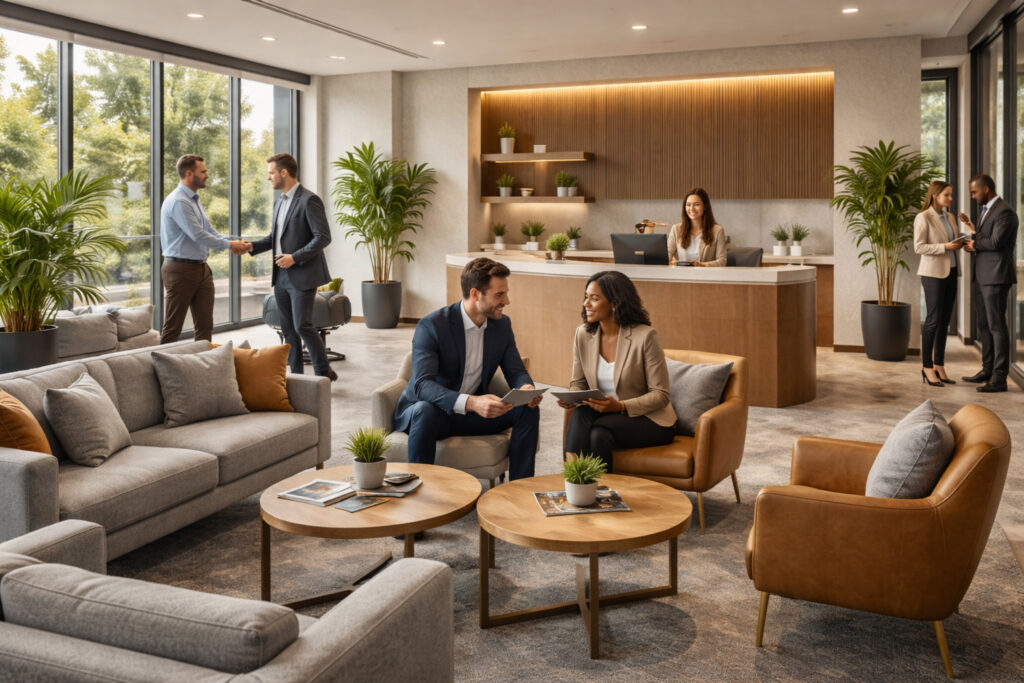
Your reception area is more than just a waiting space—it’s your company’s first impression. Before a single word is spoken, clients, partners, and potential hires are already forming opinions about your business. The furniture you choose plays a critical role in shaping that perception.
A well-designed reception area communicates professionalism, confidence, and attention to detail. A poorly designed one does the opposite.
This article explores how reception furniture influences perception and how to design an entry space that creates impact and trust.
Why First Impressions Matter in Business
Studies consistently show that people form first impressions within seconds. In a business setting, this initial judgment influences how clients perceive your credibility, reliability, and overall professionalism.
Your reception area sets the tone for everything that follows. Whether you’re hosting a potential client, interviewing a candidate, or welcoming a partner, the space communicates your standards before any conversation begins.
The Role of Furniture in Reception Design
Furniture defines both the function and the feeling of a reception area. It determines how comfortable visitors are, how long they are willing to wait, and how they interpret your brand.
Key elements include:
- Reception desk design and placement
- Seating comfort and layout
- Material and finish quality
- Spacing and flow
Each of these components contributes to the overall experience.
Reception Desks: The Focal Point
The reception desk is the centerpiece of the space. It should reflect your company’s identity while remaining functional for staff.
Consider:
- Clean, modern design for professionalism
- Adequate workspace for staff efficiency
- Visibility from the entrance
- Durable materials for long-term use
A well-designed desk immediately signals organization and competence.
Seating That Balances Comfort and Style
Seating should be comfortable enough for guests to relax, but structured enough to maintain a professional atmosphere.
- Upholstered lounge chairs for comfort
- Modular seating for flexibility
- Avoid overly casual or worn furniture
Visitors should feel welcomed—but still aware they are in a professional environment.
Layout and Flow
The arrangement of furniture affects how people move through the space.
- Clear pathways from entrance to desk
- Seating arranged to avoid crowding
- Logical spacing between elements
A well-organized layout reduces confusion and enhances the visitor experience.
Final Thoughts
Your reception area is a silent communicator. The furniture you choose tells visitors who you are before you say a word. Investing in thoughtful reception design isn’t just about aesthetics—it’s about building trust, credibility, and confidence from the moment someone walks through your door.